
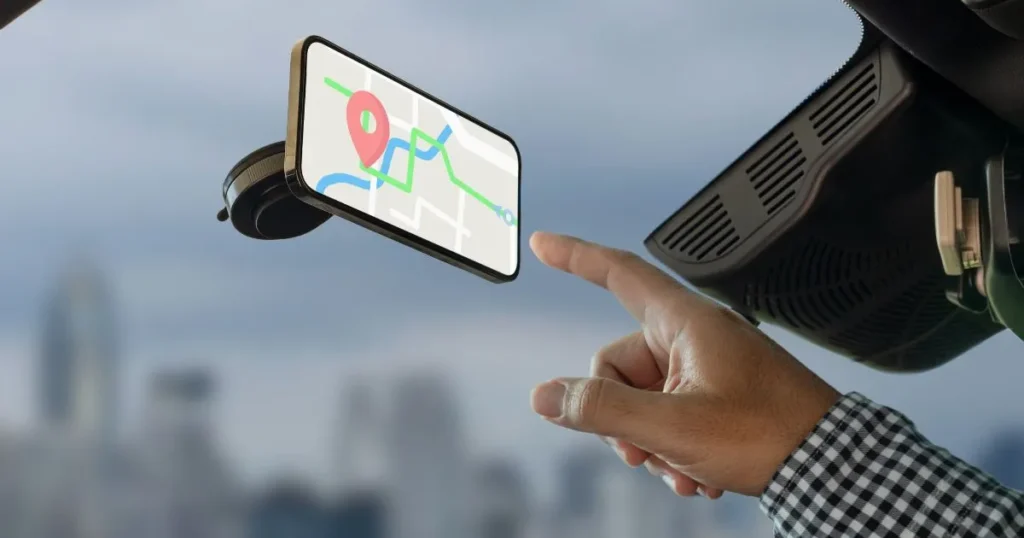
Smartphone navigation has transformed rideshare driving, yet constant interaction with GPS apps has introduced apparent safety concerns. Uber and Lyft drivers depend on turn-by-turn directions, rerouting alerts, and passenger pickup prompts while operating in dense traffic. Although these tools improve efficiency, frequent visual and cognitive demands from GPS distraction interfere with safe driving, particularly on unfamiliar roads, busy corridors, or during peak travel hours.
What Is GPS Distraction in Rideshare Driving?
“GPS distraction” occurs when a driver diverts attention from the roadway to interact with navigation software. This may involve glancing at a screen, responding to rerouting alerts, or adjusting settings mid-trip. While navigation apps are designed to assist rideshare drivers, repeated interaction can interrupt situational awareness, increasing the likelihood of delayed reactions.
Why Are Uber and Lyft Drivers Especially Exposed to These Crashes?
Rideshare drivers rely on GPS for nearly every trip, often in areas where they do not regularly travel. Unlike drivers who know their routes, rideshare operators must follow real-time instructions while also monitoring passengers, traffic signals, and surrounding vehicles. This layered attention demand raises the risk of momentary lapses and Uber and Lyft accidents.
How Does Visual Distraction Increase Crash Risk?
“Visual distraction” removes a driver’s eyes from the road, even briefly. At city speeds, a few seconds of diverted attention can mean traveling the length of a football field without full awareness. During that interval, sudden braking, pedestrians, or signal changes may go unnoticed, contributing to rear-end or intersection collisions.
Can Audio Navigation Still Create Distraction?
“Audio prompts” reduce screen glances but do not eliminate distraction. Drivers may mentally process instructions, anticipate turns, or question rerouting suggestions – all draw cognitive focus away from traffic conditions. In fast-changing environments, these mental shifts can delay hazard recognition.
What Role Does Cognitive Load Play in Rideshare Accidents?
“Cognitive load” refers to the mental effort required to manage tasks simultaneously. For rideshare drivers, this includes following GPS directions, communicating with passengers, and adapting to traffic. As mental demands increase, reaction times often slow, which can affect braking, lane changes, and hazard avoidance.
Are Certain Roadways More Affected by GPS Distraction?
Urban areas with dense intersections, one-way streets, and frequent turns present higher risks. Why? Because GPS apps may issue rapid instructions, prompting last-second maneuvers. Construction zones and temporary closures further complicate navigation, increasing reliance on screens at moments when full attention to the roadway is most needed.
How Do Sudden Reroutes Contribute to Collisions?
Real-time traffic updates on a GPS can trigger abrupt reroutes. Drivers may attempt quick adjustments, such as sudden lane changes or unexpected turns, to follow new directions. These maneuvers can surprise surrounding motorists and raise the likelihood of side-impact or sideswipe crashes.
What Evidence Is Used to Evaluate GPS Distraction After a Crash?
Investigations may review app usage data, phone records, and vehicle telemetry to assess driver behavior. Witness statements and dashcam footage can also indicate whether a driver was looking at a device or making erratic movements consistent with distraction at the time of impact.
How Is Liability Assessed in Rideshare GPS Distraction Cases?
“Liability” depends on driver conduct, app usage, traffic laws, and company policies. Determining fault often requires analyzing whether distraction contributed to unsafe driving behavior that led to the collision, alongside other roadway or vehicle factors. Liability also depends on Uber and Lyft’s tiered insurance structure, which changes based on the driver’s status at the time of the crash.
When the app is off, the driver’s personal auto policy generally applies, while limited contingent coverage may apply when the app is on but no ride is accepted. Once a trip is accepted or a passenger is in the vehicle, higher commercial liability coverage is typically available, which affects how claims are evaluated and paid.
Let Our Experienced Mt. Pleasant Uber and Lyft Accident Lawyers at Rogers, Patrick, Westbrook & Brickman LLC Pursue Justice for Your Damages
Rideshare crashes are more common than ever, and you may be entitled to compensation for your damages. To learn more, contact our Mt. Pleasant Uber and Lyft accident lawyers at Rogers, Patrick, Westbrook & Brickman LLC. For a free consultation, call today at 843-727-6500 or contact us online. With office locations in Charleston, Mt. Pleasant, Aiken, and Columbia, South Carolina, we serve clients throughout the state.